What Is My Scalp Type?
Your roots are oily by the second day. Your scalp also feels tight and flakes a little. You have assumed one of those readings must be wrong.
Both are probably right. That combination is well documented, and it is the thing most scalp advice gets backwards.
The short answer. Scalp type is care shorthand for how your scalp behaves: oily, dry, flaky, sensitive or a combination. It is not a medical diagnosis. Oil, hydration, barrier strength and discomfort are four separate things. They do not move together, so a scalp can be oily and dehydrated at once. To read yours, look at the scalp itself. 24 to 48 hours after washing, in bright light, along several part lines.
One thing to be clear about before anything else. Flaking, itch, redness or burning can point to dandruff, seborrheic dermatitis, psoriasis, eczema or a reaction to a product. Those need a dermatologist, not a scalp type. There is a list of what to watch for further down.
Oily does not mean hydrated
This is the finding worth building your whole understanding around.
A 2026 study in Skin Research and Technology looked at people with self-reported oily, dandruff-prone scalps. The oily area had higher sebum than the frontal hairline and nape, as expected. It also had lower hydration and weaker barrier function.
Sebum was negatively correlated with hydration. More oil, less water.
So oil is not moisture. Sebum is a lipid your glands produce. Hydration is water content in the skin. A scalp can be slick with one and short of the other. That is exactly the scalp that gets told to wash more often.
Which also explains oily roots with dry, flaky scalp skin. Not a contradiction. Two different measurements.
How to read your own scalp
Look at the scalp, not the hair. Most people assess their scalp by how greasy their lengths look, which tells you about hair, not skin.
Wait 24 to 48 hours after washing. A freshly washed scalp tells you nothing, and neither does day five.
Then get bright light and part your hair in five places:
- Front hairline
- Crown
- Temples
- Behind the ears
- Nape
Check each one separately. Shine, flakes, tightness, itch, redness, tenderness. Note the color and texture of any flakes too. Dry and powdery is different information from greasy and stuck down.
Then note the timing. Does anything flare after a specific shampoo, a dye, a styling product or a salon service. That pattern is often more useful than the appearance.
Zone by zone matters because scalp sebum varies by site. The 2026 study found it directly. The oily region, the hairline and the nape all measured differently on the same heads. One whole-scalp verdict averages away the useful detail.
The five readings, and what each looks like
Oily
Visible or tactile sebum at the roots. Hair looks shiny, separated or limp relatively soon after washing.
Usually concentrated at the crown and front. Look for roots that collapse fast, waxy buildup, or oily yellowish scale that sticks rather than falls off.
Then look past the oil. Itching, redness and greasy scale together point toward dandruff or seborrheic dermatitis rather than a simply oily scalp.
Dry
A scalp short on water, or short on barrier comfort. It feels tight, rough or itchy, and flakes come off fine and loose.
Look for tightness right after cleansing, small powdery white flakes, not much root shine. It tends to worsen in low humidity. Also with hot water, over-cleansing and harsh products.
Do not call it dry from flakes alone. That is the single most common misread.
Flaky
Flaky is a sign, not a type. It is worth separating out for that reason.
Fine loose white flakes can come with dryness. Persistent itch with scale can be dandruff. Greasy yellowish scale with visible inflammation is more consistent with seborrheic dermatitis.
What to record: dry and powdery, or greasy and adherent. White or yellowish. Patchy or widespread. With itch and redness, or without. Then whether similar scaling shows up beyond the scalp. Eyebrows, sides of the nose, ears, upper chest.
That last detail is the one a dermatologist will want, because it changes the picture.
Sensitive
Defined by sensation, not appearance. Itching, burning, stinging, tingling, pain or tightness, triggered by things that should not cause them.
It can be primary, with nothing visible at all. Or secondary to seborrheic dermatitis, psoriasis or eczema.
The test is reproducibility. Does shampooing reliably sting. Does heat, sweat, pollution, dye, fragrance or brushing reliably hurt. If yes, and your scalp looks fine, that is still a real finding.
Combination
Oilier crown and front, with drier, tighter or more reactive areas at the hairline or nape.
This is the most common real-world answer, and it follows directly from the zone data. Compare your zones against each other rather than issuing one verdict.
Oily roots with dry ends belongs here too, except it is not a mixed scalp at all. That is scalp skin and weathered hair behaving differently. Different material. The ends are explained by porosity, not by your scalp.
Dandruff is not one condition
Two things worth knowing, because they change what you'd do about it.
First, dandruff and seborrheic dermatitis sit on a spectrum. A 2015 review described dandruff as scalp itch and flaking without visible inflammation. Seborrheic dermatitis involves inflamed, itchy, scaling areas, on the scalp and other oil-rich regions.
Second, dandruff comes in a dry version and an oily version. A 2020 study of 54 women with dandruff split them almost evenly: 25 with low sebum, 29 with high sebum.
Both groups had lower hydration, less acidic skin and more water loss through the skin than healthy controls. The low-sebum group was the most dehydrated. The high-sebum group showed more inflammatory activity.
Same symptom, two different underlying states. Which is why one shampoo cannot be the answer for everyone. It is also why washing more helps some people and makes others worse.
Sensitive scalp is more common than you think
It gets dismissed as a marketing word. The numbers say otherwise.
A 2023 review found roughly 30 to 50 percent of people self-report a sensitive scalp across studies. In a representative French sample of 1,011 people aged 15 and over, 44.2 percent reported a sensitive or very sensitive scalp. More women than men.
An earlier review found scalp sensitivity was more frequent and more intense in people with greasy or dry scalps. The triggers named most often were heat, pollution, emotional stress and shampoo.
Honest caveat. The mechanisms are still not well understood, and the diagnostic line is unsettled. Common and real, not fully explained.
Your products are a suspect
Any product can contain an irritant or an allergen. Shampoos, conditioners, fragrances, preservatives and hair dye have all been implicated in scalp contact dermatitis.
Dye is the frequent offender. Symptoms can include redness, flaking, itch, burning, discomfort and sometimes shedding.
Natural and premium make no difference here. A plant extract is a chemical, and some of the best-known contact allergens are botanical. Price is not a safety feature.
So if your scalp reliably flares a day or two after a specific product or service, write it down. Take that list to a dermatologist. The timeline is the evidence.
Washing more is not the universal fix
The instinct with oily roots or flakes is to strip harder. Sometimes that is right. Often it is the thing making it worse.
Frequent shampooing is documented as a contributor to scalp sensitivity, because it disturbs barrier function. Dandruff also comes in dry and oily forms with different hydration profiles. So the strategy has to match which one you have.
The American Academy of Dermatology puts frequency as individual rather than fixed. Fine or straight hair and oily scalps may need frequent washing. Coarse, curly or coily hair can be washed as needed, with a dandruff shampoo roughly weekly where relevant.
One more note on scalp scrubs, since they are everywhere. A 2024 study tested a hydroxy-acid scrub plus a copper-peptide serum. It found 44.83 percent of participants rated as normal scalp after 15 days. That sounds good. It also had no control group and tested one specific commercial regimen. So it is not evidence that exfoliating works for everyone. Promising, not proven.
When to see a dermatologist
This section is the important one. Scalp typing is cosmetic. These are not.
Get it looked at for:
- Itch, pain or burning that is persistent or severe
- Redness that does not settle
- Thick or sharply defined scale, or plaques
- Crusting, bleeding or pustules
- Patchy hair loss
- Scaling that extends beyond your scalp to eyebrows, nose, ears or chest
- A suspected reaction to a hair product or dye
None of that is a scalp type. It is a condition that needs a diagnosis, and several of them respond well to treatment once correctly identified.
Your zone-by-zone notes and your product timeline are genuinely useful at that appointment. Bring them. They are history, not a diagnosis.
What your scalp means for your brushing
Start with what a brush cannot do. It does not treat dandruff, seborrheic dermatitis or any inflammatory scalp condition. Nothing in our range does. Anyone telling you otherwise is selling something.
What brushing does change is real, and narrower than that.
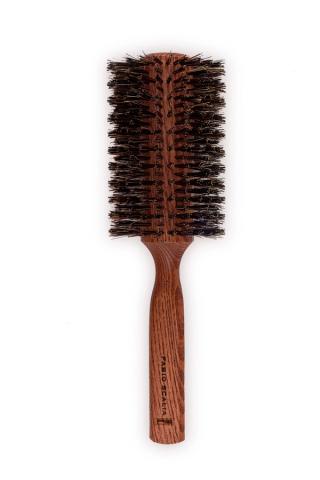
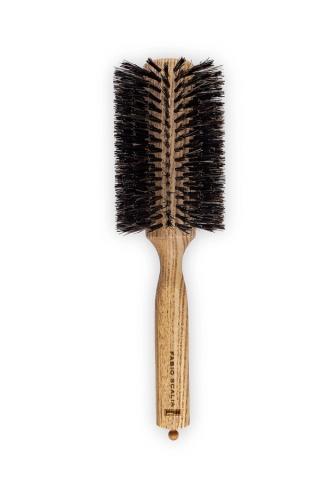
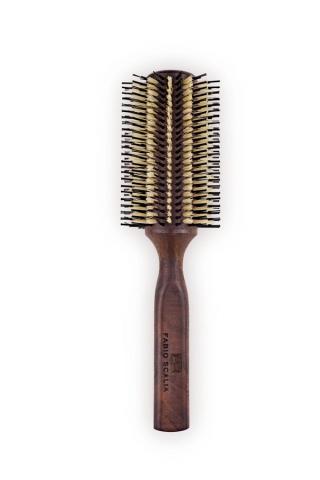
Oily scalp, dry ends. This is the one genuine mechanism. Boar bristle is keratin, the same protein your hair is made of, so it glides instead of dragging. It moves the oil your scalp is already producing down toward ends that never get any. Surplus at the root, shortage at the tip. That is a distribution problem, and a brush can genuinely help with it. The limit is that boar is short and soft. On thick or dense hair it never reaches the scalp, which is why La Chiara runs French nylon pins through the boar to part the hair first.
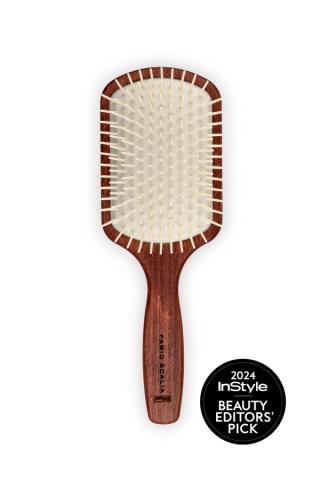
Sensitive or sore scalp. Be gentler than feels necessary. Do not brush over an area that is inflamed or tender. Brushing is a documented trigger for some people with scalp sensitivity. A paddle brush that detangles gently is the right build here. La Claudia is made for that, and it massages the scalp rather than scraping it.
Flaking. Do not brush aggressively to lift flakes off. You are abrading skin that is already compromised, and the flakes come back. Detangle gently on wet hair with a wide-tooth comb like Gio and deal with the cause separately.
Clean your brush. A brush holds old product and old sebum, and every use puts some back. If you are trying to work out what is irritating your scalp, a dirty brush is an uncontrolled variable. Ciccio rakes the trapped hair out, Dada lifts the product residue off the body.
Your scalp does not pick your brush. Texture, density and curl pattern do, and those three are what the brush quiz asks about.
Next wash, wait two days, then look at five part lines instead of one. The differences between your own zones will tell you more than any label.
FS Collezione. Italian hair brushes for every kind of hair.
Frequently Asked Questions
Is my scalp dry or is it dandruff?
Fine dry flakes can look like dandruff. Dry scalp is specifically about skin losing too much water. Dandruff usually involves flaking with itch. They are hard to separate at home, so persistent symptoms are worth a professional look.
Can I have an oily scalp and dry flakes at the same time?
Yes. Research found lower hydration and weaker barrier function even in high-sebum, dandruff-affected scalps. Oily roots and dry, flaky scalp skin coexist routinely.
Why does my scalp get oily so fast after washing?
Sebum production varies between people and between scalp sites. But fast oiliness can also be complicated by product buildup, your hairstyle or a flaking condition. So whether there is itch, redness or scale alongside it matters.
Does an oily scalp mean I should wash every day?
Not necessarily. Frequency is individual. Fine or straight hair with an oily scalp may need frequent washing. Coarse, curly or coily hair can be washed as needed. Over-washing can contribute to sensitivity.
How do I know if my scalp is sensitive?
Reproducible discomfort is the signal. Burning, stinging, itch, tingling, tightness or pain after ordinary triggers like shampoo or heat. That matters more than whether anything is visibly red.
Can shampoo, dye or styling products cause flakes and itch?
Yes. Hair products can cause irritant or allergic contact dermatitis. Redness, flaking, itch, burning, sometimes shedding. Dye is the most frequently implicated.
What do yellow, greasy flakes mean?
Yellowish greasy scale fits seborrheic dermatitis better than simple dry scalp, especially with itch or redness. More so if similar scaling appears around the ears, eyebrows, nose or upper chest. Worth getting assessed.
Is my scalp type permanent?
No. Sebum, barrier comfort and reactivity all shift. Products, washing habits, season, heat, sweat, disease activity. Read your current signs, not a label you were given once.